
RAISE Site Visit Reflection: Young Audiences of Louisiana (YALA)

As part of the RAISE inter-visitation experience, Teaching Artist Kristin Brandt visited Young Audiences of Louisiana (YALA) for a two-day professional learning exchange. During her visit, she observed classroom residencies, engaged with Teaching Artists and school leaders, and participated in conversations exploring program design, teaching artistry, and community engagement.
The experience provided both Kristin and all of Arts for Learning WNY with important insight into YALA’s approach to student learning and its deep integration of arts, education, and community partnership. What follows is Kristin’s reflection on her visit and key takeaways for her practice:
RAISE Site Visit Reflection
By Kristin Brandt, Teaching Artist
I had the opportunity to participate in a RAISE inter-visitation experience with Young Audiences of Louisiana (YALA), and I am grateful for the time spent learning alongside their Teaching Artists, administrators, and school partners. The visit offered a meaningful look at how YALA approaches whole student learning, teaching artistry, and community engagement in practice.
Before arriving, I set three goals: to better understand YALA’s holistic approach to student learning, to explore their strategies for family and community engagement (especially around their large-scale school event), and to observe Master Teaching Artists in action to bring back at least one new instructional strategy for my own work.
What I experienced not only met those goals...it expanded them.
Observing Teaching Artist Practice
One of the most impactful observations was Sophia Rabinovitz-Moses’s 5th-grade residency. Her work centered on somatic wellness and movement, and I was struck by her precise, respectful use of anatomical language, including references to the vagus nerve. A guided exercise using this concept was especially powerful, and it is a strategy I plan to bring into my own facilitation.
Her residency theme of migration, immigration, and movement was deeply integrated into classroom learning. The alignment between artistic practice and curriculum was clear and intentional. I also observed a unique approach to tableau work that offered a fresh perspective on structuring student participation.
Earlier that day, I engaged in a conversation with Sophia and team members about planning structures, meeting design, and teacher buy-in. A key takeaway was the importance of keeping planning processes active, responsive, and closely aligned with classroom needs.
Leadership and Professional Learning

A working lunch with Ja’nese Brooks-Galeth, YALA’s Director of Professional Development, offered another valuable perspective. Her reflection on transitioning from Teaching Artist to administrator underscored the importance of understanding both classroom and organizational systems.
It reinforced the need for strong communication and shared understanding between Teaching Artists and administrative teams to support effective programming.
Student Learning in Action
One of the most memorable experiences of the visit was attending the Crocker Elementary Black History Month event - it was amazing! The program featured dance, drumming, chanting, and storytelling rooted in the Harlem Renaissance, the Underground Railroad, and jazz history.
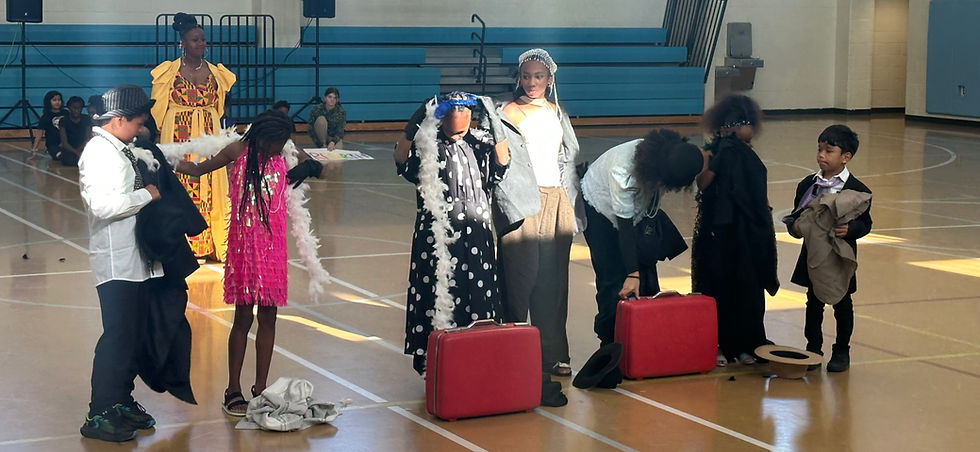
What stood out most was the depth of student engagement. Students not only performed but also created costumes and props, fully participating in the artistic process. The collaboration between teaching artists and school staff was evident and deeply supportive, creating space for meaningful student ownership.
Innovation in Teaching Practice
On the second day, I observed Teaching Artist Todd Shaffer’s residency, which transformed English Language Arts content into a game-based learning experience. His “game show” structure created a highly engaging, imaginative learning environment.
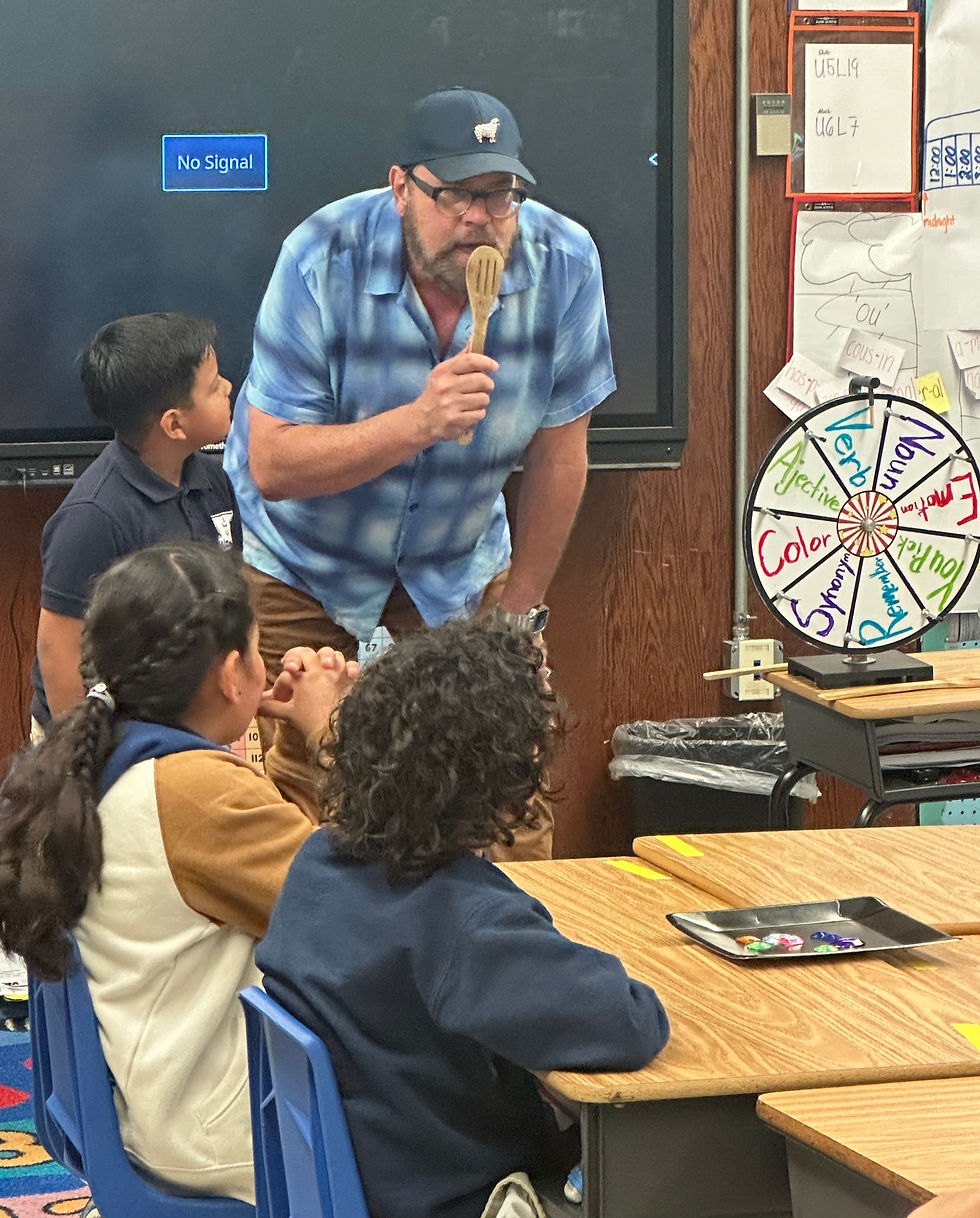
This sparked ideas for incorporating gamification into my own practice, including more intentional use of interactive structures to support participation and engagement.
Later conversations with YALA staff and Metis (evaluation) partners also explored innovation in program design, including the use of tools for data collection and progress tracking. These discussions highlighted the ongoing evolution of arts education and the importance of staying open to new approaches while maintaining strong instructional foundations.
Community Engagement and Collective Practice
The visit concluded with a Community Care conversation at the YALA office, where I met staff across roles and they reflected on the successes and challenges of their Grow Together Fest.
Although I was unable to attend the festival itself, hearing directly from staff and observing their collaboration provided a clear sense of how deeply rooted their community engagement work is.
Across both days, what stood out most was the intentionality behind every layer of the work - from classroom residencies to large-scale community events. There is a consistent commitment to connection between students, teaching artists, schools, and families.
Final Reflections
This visit gave me far more than new ideas, it gave me renewed energy for the work. I left with practical strategies I can bring into my programming. I also gained a deeper appreciation for teaching artistry as both a creative and relational practice.
Most importantly, I was reminded of the value of stepping into other communities of practice. Observing Master Teaching Artists and engaging with peers across contexts and the nation remains one of the most meaningful ways to grow as an educator and leader.
I am deeply grateful for the experience and look forward to carrying these lessons forward in my work with Arts for Learning WNY.


Comments