
Advocating for the Arts: Young Audiences National Conference 2026


This past March, Executive Director Amelia Schrader and Director of Programs Allison Rabent traveled to Washington, D.C. to attend the Young Audiences National Arts in Education Conference. Held March 26 and 27 at the heart of the nation’s capital, this biennial gathering brought together leaders, teaching artists, and educators from Young Audiences affiliates across the country to learn, collaborate, and celebrate the transformative power of arts education.
Young Audiences, the nation’s largest arts in education nonprofit, has been connecting students with professional teaching artists for over 75 years. The National Conference serves as a cornerstone event for affiliate organizations like ours, providing a dedicated space to share research, best practices, and stories of impact from communities throughout the United States. This year’s conference brought a particular sense of urgency and purpose as the arts education community navigated a rapidly shifting national education landscape.
Taking Our Stories to Capitol Hill
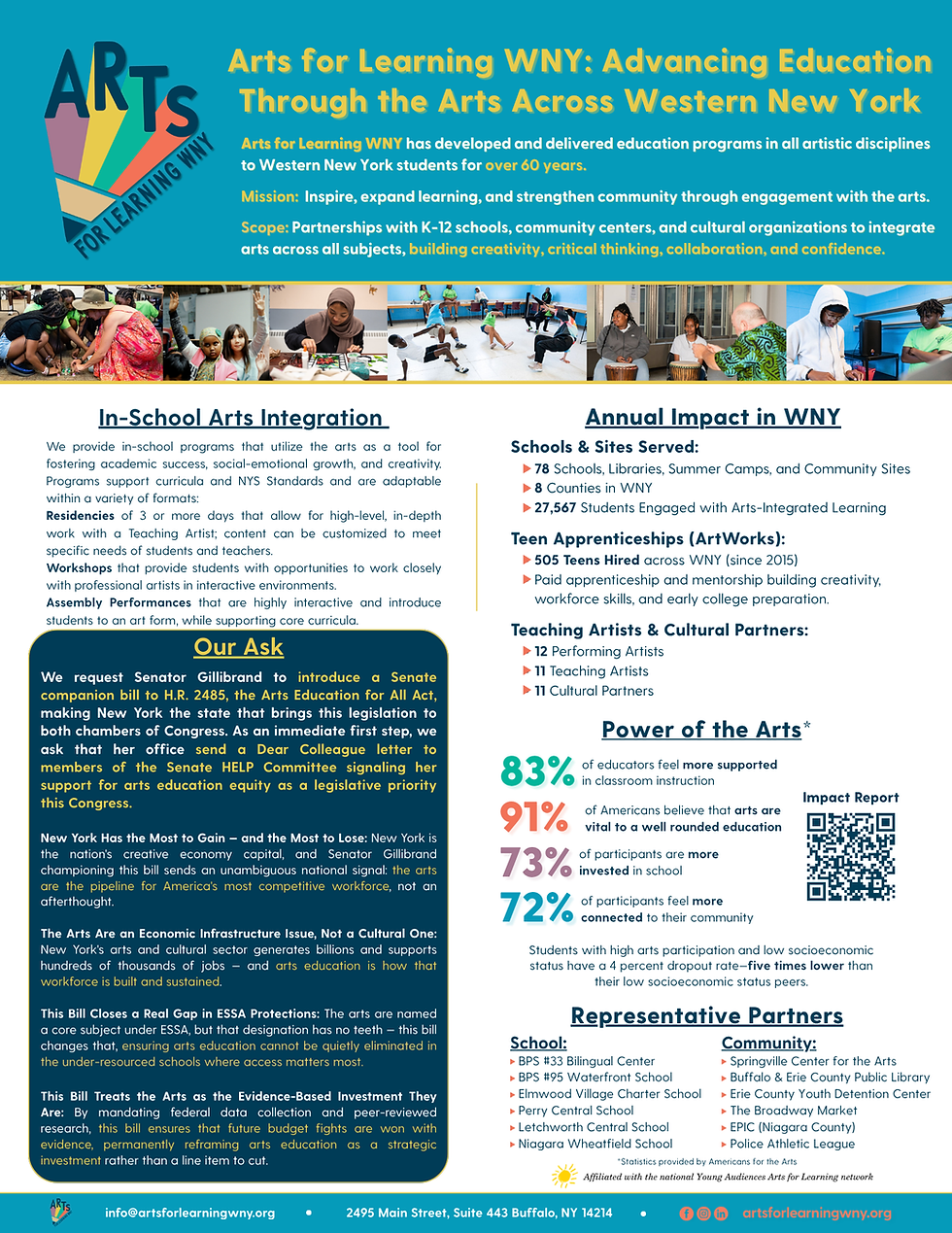
One of the most meaningful and distinctive opportunities at this year’s conference was a dedicated day of advocacy on Capitol Hill. Amelia and Allison were joined by Dawn Hill, a 4th grade teacher at Waterfront Elementary School (BPS #95), making their advocacy team a powerful combination of arts administration and classroom experience. Together, they met with the offices of Senator Kirsten Gillibrand, Representative Joe Morelle (NY‑25), and Representative Tim Kennedy (NY‑26) to speak directly about the importance of protecting and expanding access to arts education through the Every Student Succeeds Act (ESSA).
ESSA, the landmark federal education law, recognizes the arts as a core academic subject and provides critical funding mechanisms that support arts programming in public schools. These conversations on the Hill were an opportunity to remind elected officials of what is at stake when arts education is deprioritized or cut entirely from school budgets. The team shared firsthand accounts of how arts programming has transformed classrooms from routine to inspiring, and how consistent access to the arts has had measurable impacts on student engagement, social emotional development, and academic outcomes.
Our work reaches all eight counties of Western New York, and these stories reflected the breadth of our community: from urban schools in Buffalo to rural districts where an Arts for Learning teaching artist may be the only professional arts experience a child receives. Sharing these stories with our elected representatives was not just an advocacy exercise; it was a reminder of why this work matters and how deeply it is felt across our region.
Attending the national conference was an incredibly positive and inspiring experience. Visiting Capitol Hill and meeting with senators’ offices was an exciting opportunity to share the important message that arts in the classroom truly matter. It was equally valuable to spend time with members of our local program, whose perspectives made the experience both informative and enjoyable. The conference itself provided meaningful insight into how others implement the program in their own school communities, while also reinforcing just how impactful arts in education can be for students everywhere!
Dawn Hill, 4th Grade Teacher, Waterfront Elementary School (BPS #95)
Two Days of Learning, Collaboration, and Community
Building on the momentum gained on Capitol Hill, the team dove into two days of conferences hosted by the Young Audiences National Office. The programming was rich and wide-ranging, reflecting the complexity and creativity of arts in education work happening across the country. Sessions explored best practices for integrating Social Emotional Learning (SEL) into artist residencies, strategies for expanding access to arts programming in rural and underserved communities, approaches to accurately and ethically tell the stories of students and families impacted by our work, and more.
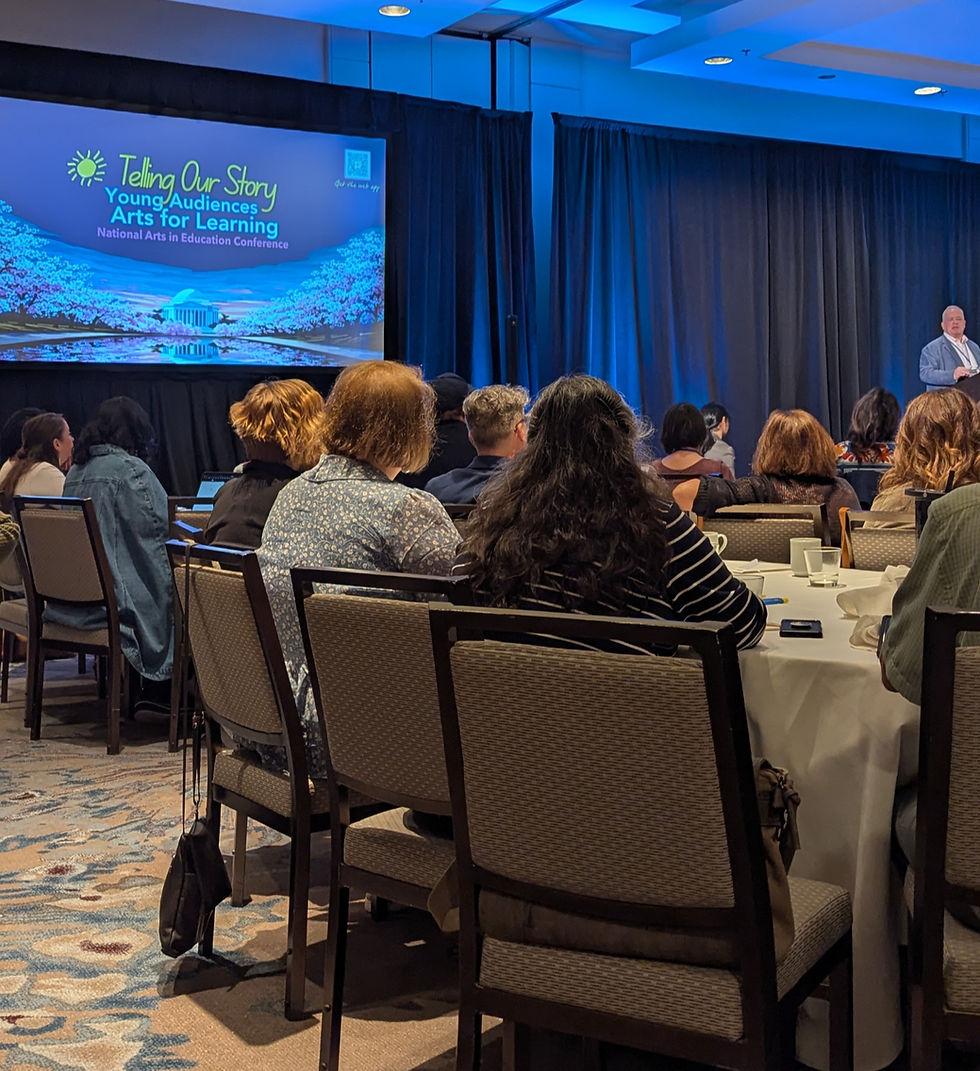
The conference provided invaluable time for peer learning and exchange. Amelia and Allison collaborated with fellow leaders and educators from Young Audiences affiliates in cities and states across the nation, building relationships and gathering insights that will directly inform programming and organizational practices here in Western New York. The energy sustained in a room full of hundreds of people who share a deep commitment to arts education was equally grounding and galvanizing.
Amelia and Allison returned home with new tools, renewed purpose, and an even stronger conviction that the arts are not a luxury; they are a necessity. We look forward to implementing everything they learned as we continue to serve students, schools, and communities across Western New York in the months ahead.


Comments